Rose and Skull: A Designer Review for Business Merch
As an embroidery designer who regularly consults with small businesses on merchandise production, I approach every new machine embroidery design with a critical eye toward commercial viability. When evaluating the Rose and Skull design for business applications, my primary focus is not just its aesthetic appeal during the Halloween season, but its structural integrity as a long-term branding asset. This review breaks down how this specific motif performs when translated from a digital screen to a tangible finished product intended for retail or staff use.
Visual Personality and Brand Alignment
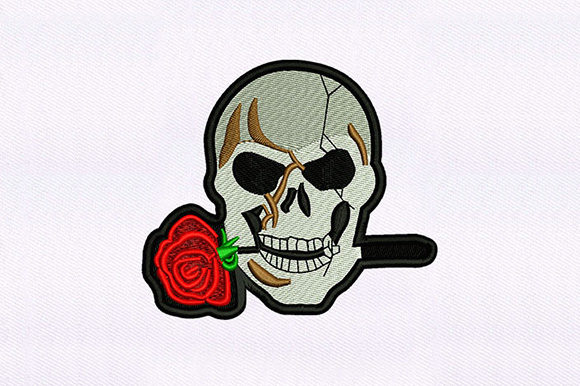
The first impression of Rose and Skull is distinctly bold yet balanced. While clearly categorized under Halloween, the juxtaposition of organic floral elements with structured skeletal imagery creates a versatile visual tension. For a small business owner, this duality is valuable. It avoids being overly cartoonish, which can undermine perceived value, while steering clear of aggressive horror aesthetics that might alienate general customers. Instead, it reads as rustic, alternative, or vintage-inspired.
For creative studios, tattoo parlors, alternative boutiques, or artisanal bakeries, this design signals a specific subculture alignment without sacrificing professionalism. It feels handmade and authentic rather than mass-produced. However, for more traditional corporate environments or family-centric services, the skull element requires careful placement to ensure it aligns with your established brand identity. The design succeeds because the rose softens the edge, making it appropriate for small business merch that targets a niche but dedicated demographic.
Commercial Applications and Merchandise Strategy
In real-world commercial embroidery scenarios, Rose and Skull demonstrates significant versatility across various product categories. Its composition lends itself particularly well to the following applications:
- Embroidered Patches: This is perhaps the strongest use case. The distinct outline typically associated with this motif allows for clean merrowed edges. As a patch, it functions as modular branding for denim jackets, backpacks, or beanies, allowing customers to buy into the brand at a lower price point than full apparel.
- Apron Embroidery: For coffee shops, florists, or craft breweries, placing this design on the chest or pocket area of an apron creates immediate staff recognition. The verticality often found in rose-and-skull compositions fits perfectly within standard apron placement zones without interfering with functional pockets.
- Tote Bag Design: Canvas tote bags are high-margin items for Etsy sellers and local markets. This design provides enough visual weight to anchor the center of a natural cotton bag, serving as both a shopping vessel and a walking advertisement.
- Cap Embroidery: When adapted correctly, this motif works as a centered front cap design. It appeals to streetwear demographics and serves as excellent event merchandise for pop-up markets or seasonal launches.
When utilizing this digital embroidery file, remember that compatibility is broad. The availability of formats including 10O, ART, CND, DSB, DST, DSZ, EXP, HUS, JEF, PES, TAP, VIP, VP3, and XXX ensures that whether you are running a single-needle home machine for prototyping or a multi-head industrial setup for bulk custom apparel, integration should be seamless. Always verify your specific machine’s preferred format before beginning production to avoid conversion errors.
Technical Considerations for Production Success
While the artistic concept is sound, the technical execution determines profitability. Rose and Skull designs often contain varying densities due to the difference between filling bone structures and satin-stitching petals. As a professional, I advise paying close attention to stitch density and registration.
If you intend to use this for cap embroidery, you must confirm the design has been digitized specifically for curved surfaces. Standard flat designs will distort on a cap frame. Similarly, for fabric texture considerations, this design requires adequate stabilization. On stretchy knits or loose-weave canvas, a cutaway stabilizer is non-negotiable to prevent puckering around the detailed floral elements. High-density areas in the skull may require topping on textured fabrics like fleece or terry cloth to maintain definition.
Be cautious with sizing. Intricate details in the rose leaves or skull teeth can become lost if scaled down too aggressively for small sleeve cuffs or baby onesies. Before committing to a bulk run, measure the actual stitch field against your intended hoop size. If the design relies on tiny text integrated into the artwork, consider removing or enlarging it for smaller applications to ensure legibility.
Strategic Placement and Risk Management
Not every placement suits every business. While Rose and Skull is visually striking, there are contexts where caution is warranted:
- High-Wash Items: If producing uniforms for kitchens or healthcare settings that undergo industrial laundering, verify the thread type and density. Complex shading stitches may degrade faster than simple fills. Test wash samples are mandatory.
- Dark Uniforms: Contrast is key. A black skull on a navy shirt will disappear. Ensure your thread colors provide sufficient luminance against the base garment. You may need to add an underlay or adjust color values specifically for dark goods.
- Conservative Clientele: Even if your brand is edgy, consider offering a "rose-only" variation for gift cards or packaging inserts where the skull might be misinterpreted by older demographics or gift recipients outside your core niche.
Impact on Customer Trust and Product Value
Quality embroidery directly correlates to perceived value. A poorly executed Rose and Skull with gaps, poor registration, or excessive jump stitches screams "amateur." Conversely, a crisp, well-digitized application elevates a basic $5 tote bag to a $25 boutique accessory. For handmade brands and Etsy sellers, this design acts as a trust signal; it shows you have invested in professional design assets rather than generic clip art.
Furthermore, consistent use of this motif across multiple touchpoints—staff wear, packaging, and retail items—reinforces memory structures in your customer's mind. When they see the rose and skull combination elsewhere, they immediately associate it with your business. This visual consistency is the foundation of strong brand identity in the saturated small business market.
Professional Designer Notes for Implementation
Before loading this embroidery file into your machine for a client order or stock production, follow this professional checklist:
- Create a Printable Mockup: Never assume scale. Print the design at actual size on paper and pin it to the garment. Visualizing the footprint prevents costly placement errors.
- Test in Monochrome: Run a test sew using only black and white thread first. This reveals structural issues in the digitizing that color changes might hide. If the design holds up in monochrome, it is structurally sound.
- Verify Licensing: Confirm the commercial license terms included with your purchase. Just because a file format like PES or DST is compatible does not automatically grant permission for unlimited resale of embroidered goods. Protect your business legally.
- Check Thread Contrast: View your selected thread palette under store lighting, not just studio lighting. Metallic or variegated threads can enhance the Halloween vibe but may reduce readability in dim retail environments.
- Compare Beside Other Assets: Place Rose and Skull next to your existing logo and typography. Ensure the style weight matches. If your logo is minimalist line art, a heavily filled skull design may clash. Adjust density or style accordingly.
Ultimately, Rose and Skull is a robust candidate for seasonal and evergreen merchandise when treated with technical respect. By prioritizing proper stabilization, testing, and strategic placement, small business owners can transform this digital asset into a profitable, brand-building physical product. Whether for a limited Halloween drop or a permanent collection addition, success lies in the details of execution.